Why fireworks frighten puppies
Fireworks are loud, bright, and completely unpredictable, which is a difficult combination for a young dog. Puppies hear a wider range of frequencies than we do, so a bang that startles you can feel overwhelming to them. The flashes, the vibrations, and the smell of smoke all add up. A frightened puppy may tremble, pant, hide, bark, or try to bolt, and these reactions are normal. Your job is not to eliminate the fear instantly, but to make your puppy feel as safe as possible while it passes.
Prepare a safe den
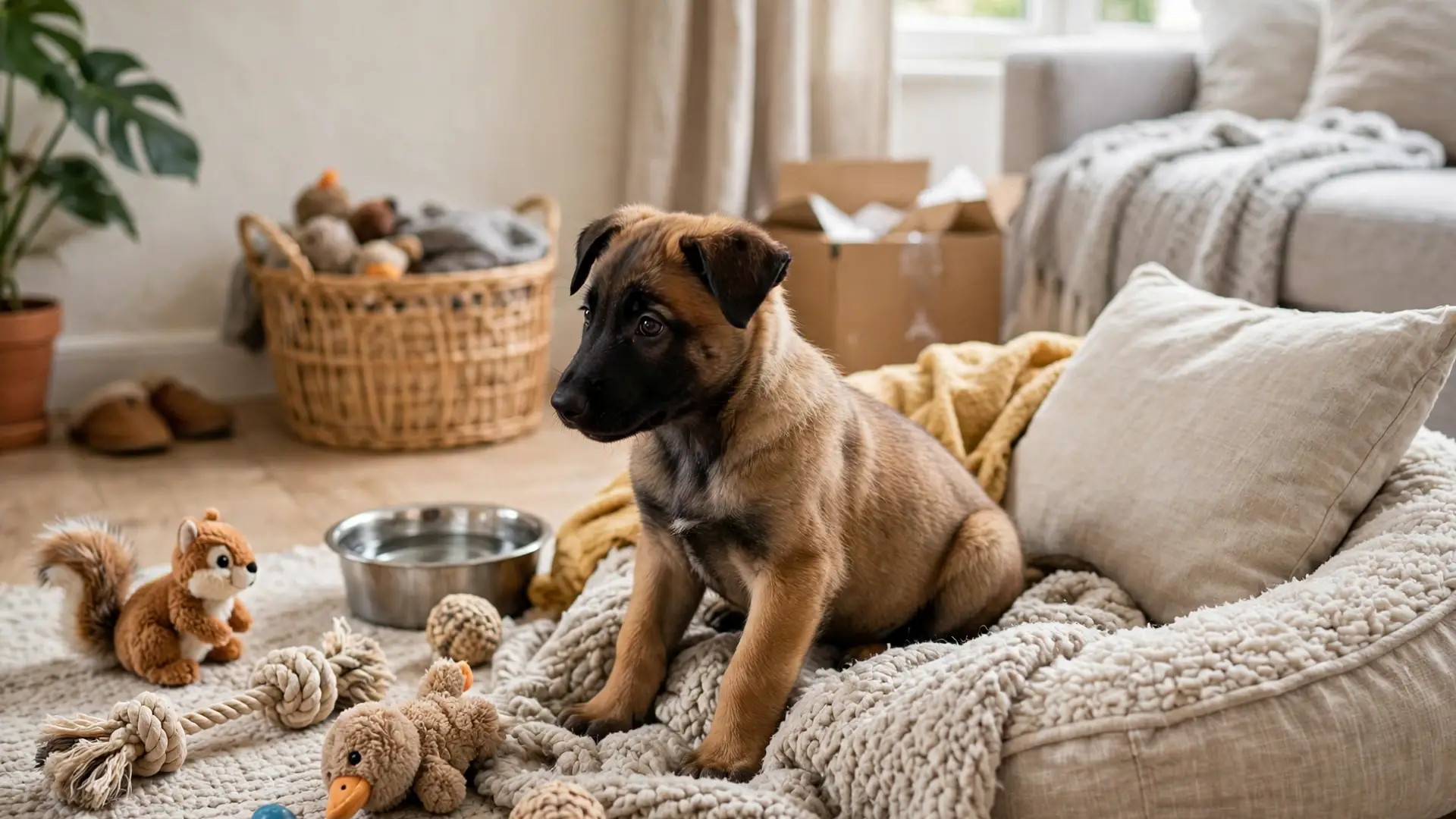
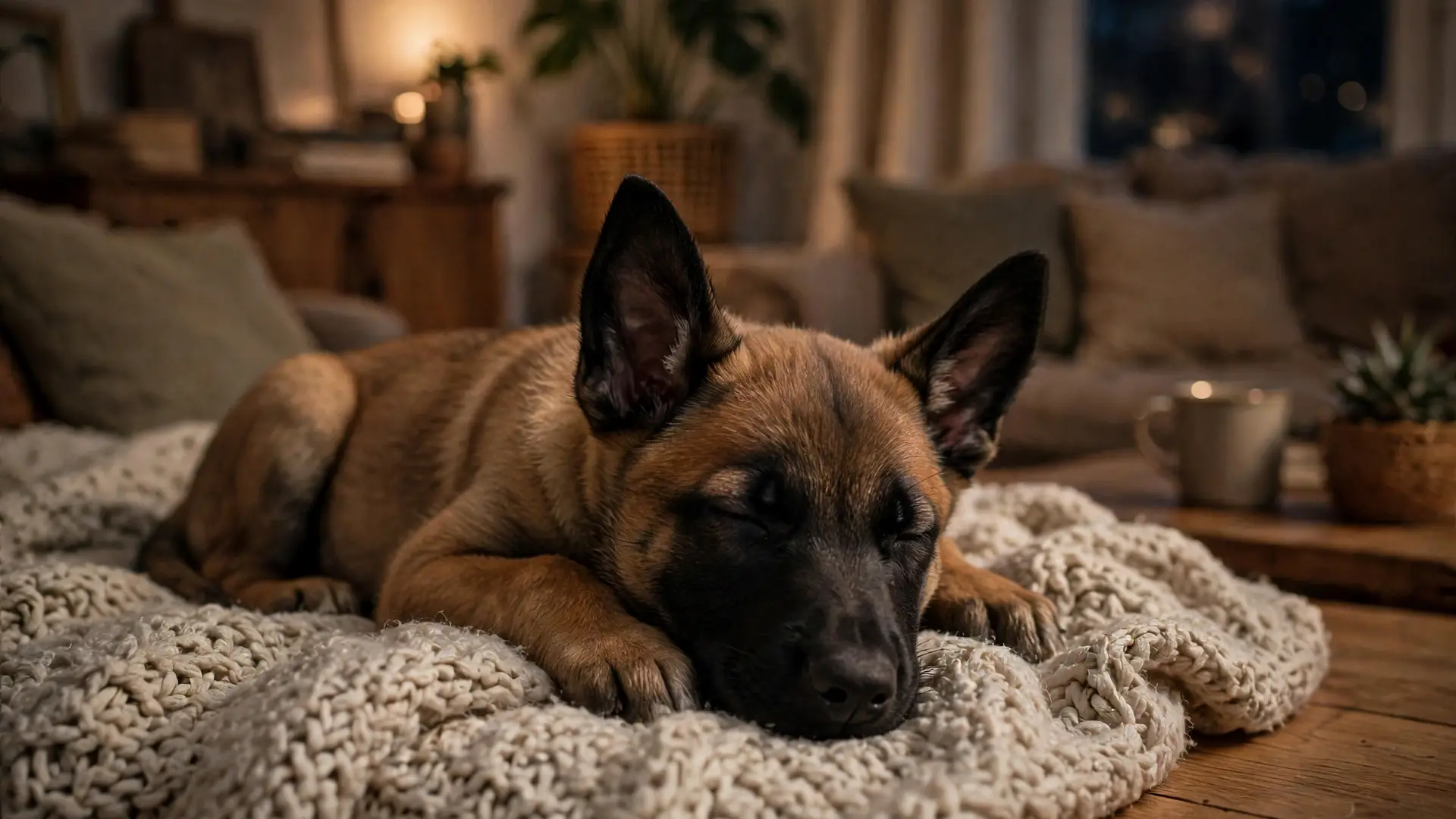
Before the fireworks start, set up a cozy den in a quiet interior room, away from windows. A crate with the door open, draped with a blanket, works well, or a corner with your puppy’s bed and favorite blanket. Add a worn shirt that smells like you, a chew toy, and fresh water. Let your puppy explore the den in the days before, with treats hidden inside, so it already feels like a good place when the big night arrives.
Sound and light control
Close windows, curtains, and blinds to muffle sound and block flashes. Turn on the television or play calm music at a steady volume to mask the bangs. A consistent background sound gives your puppy’s ears something predictable to focus on. Avoid complete silence, which makes each bang feel sharper by contrast, and avoid sudden volume changes yourself.
Stay calm and present
Your puppy takes emotional cues from you. If you act worried or fuss over them excessively, it can confirm that something is wrong. Instead, be calmly present: sit nearby, speak in a relaxed voice, and carry on with something ordinary like reading. Gentle petting is fine if your puppy seeks it, but do not force cuddles on a puppy that wants to hide. Let them choose the den if that is where they feel safest.
Do not force exposure
Never drag a frightened puppy toward the window to “get used to it,” and never punish fear reactions like trembling or whining. Flooding a puppy with the scary stimulus can make the fear worse and damage their trust in you. If your puppy panics, reduce the intensity: move further from the noise, add more masking sound, and sit with them quietly until it passes.
Vet disclaimer
This guide offers general information only and is not veterinary or behavioral advice. If your puppy shows extreme panic, injures themselves, or their fear extends well beyond fireworks night, speak to your veterinarian. A vet can rule out medical issues and discuss options such as anxiety wraps, pheromone diffusers, or, in severe cases, prescribed support.