See the world through puppy eyes
Puppies explore the world with their mouths, which makes an unprepared house an obstacle course of hazards. Puppy-proofing before arrival saves panic later and lets your puppy explore safely. Walk through your home at puppy eye level, which for a small breed means getting down on your hands and knees, and look for anything chewable, swallowable, or spillable.
Kitchen and living room
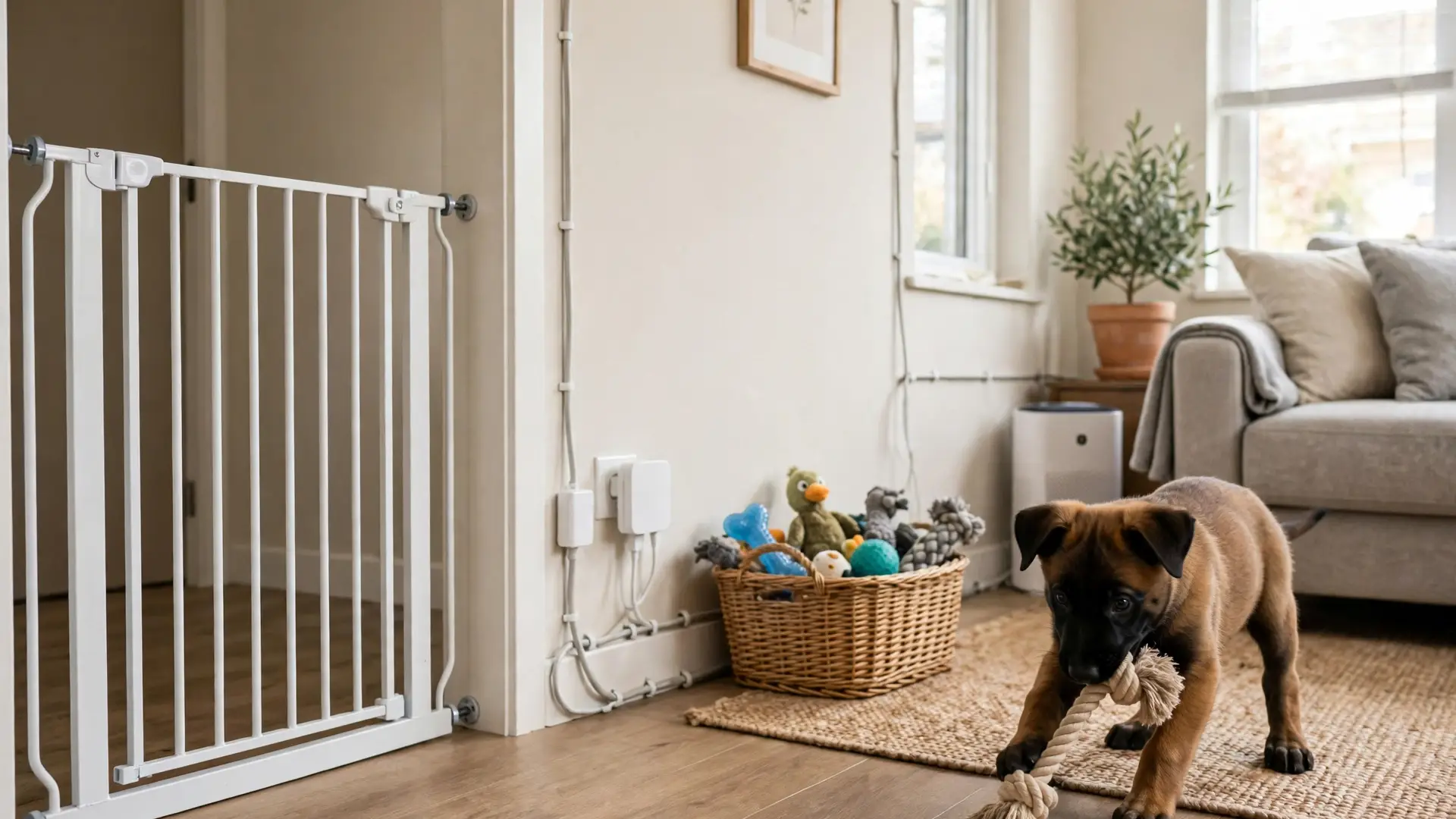
Secure bins behind closed doors, because chicken bones and wrappers are irresistible and dangerous. Tape or lift electrical cables out of reach, and move shoes, remote controls, and children’s small toys into closed cupboards. Put cleaning products, laundry pods, and medications in high, latched cupboards. Block gaps behind sofas and appliances where a small puppy could get stuck.
Plants and garden
Many common plants are toxic to dogs, including lilies, azaleas, and sago palms, and some bulbs are dangerous if chewed. Check your houseplants and garden against a reliable toxic-plant list, and move or fence off anything risky. In the garden, fill gaps under fences, lock away fertilisers and slug pellets, and remove access to ponds or pools until your puppy is older and supervised.
Bedrooms and bathrooms
Keep toilet lids closed and bathroom bins lidded. Store medicines, razors, and cosmetics in closed cabinets. Pick up hair ties, socks, and underwear: swallowed fabric is a common cause of emergency surgery in young dogs. Keep laundry baskets covered and the tumble dryer door shut. A bedroom can be a lovely puppy rest area once the floor is clear.
Proofing plus management
No house can be made perfectly safe, so combine proofing with management. Use a puppy pen or a small, safe room when you cannot supervise directly, and provide plenty of legal chew toys, rotated for novelty. Supervise actively when your puppy is loose: most mischief happens in the three seconds nobody is watching. Calm supervision plus good chew options prevents most trouble.
Vet disclaimer
This guide shares general safety information only and is not veterinary advice. If your puppy eats something suspicious, or shows vomiting, drooling, lethargy, or distress, contact your veterinarian or an emergency animal poison helpline immediately. Do not try to make your puppy vomit unless your vet specifically tells you to.