When teething happens
Puppies are born toothless, grow a full set of twenty-eight needle-sharp baby teeth by about eight weeks, and then lose every single one. The teething process usually begins around twelve weeks and continues until six or seven months, when the forty-two adult teeth have settled in. Those months in between can be uncomfortable for your puppy and challenging for your furniture. Understanding the timeline helps you respond with sympathy instead of frustration when the chewing begins.
Signs of teething
A teething puppy is rarely subtle about it. You may notice drooling, red or slightly swollen gums, and a sudden passion for chewing anything within reach. Some puppies go off their food for a day or two, chew more frantically in the evening, or leave tiny rice-grain-sized teeth in their bedding. You might even find a tooth stuck in a toy. Mild grumpiness is normal too: imagine how you feel with a toothache, and offer your puppy the same gentleness you would want.
Safe chew options
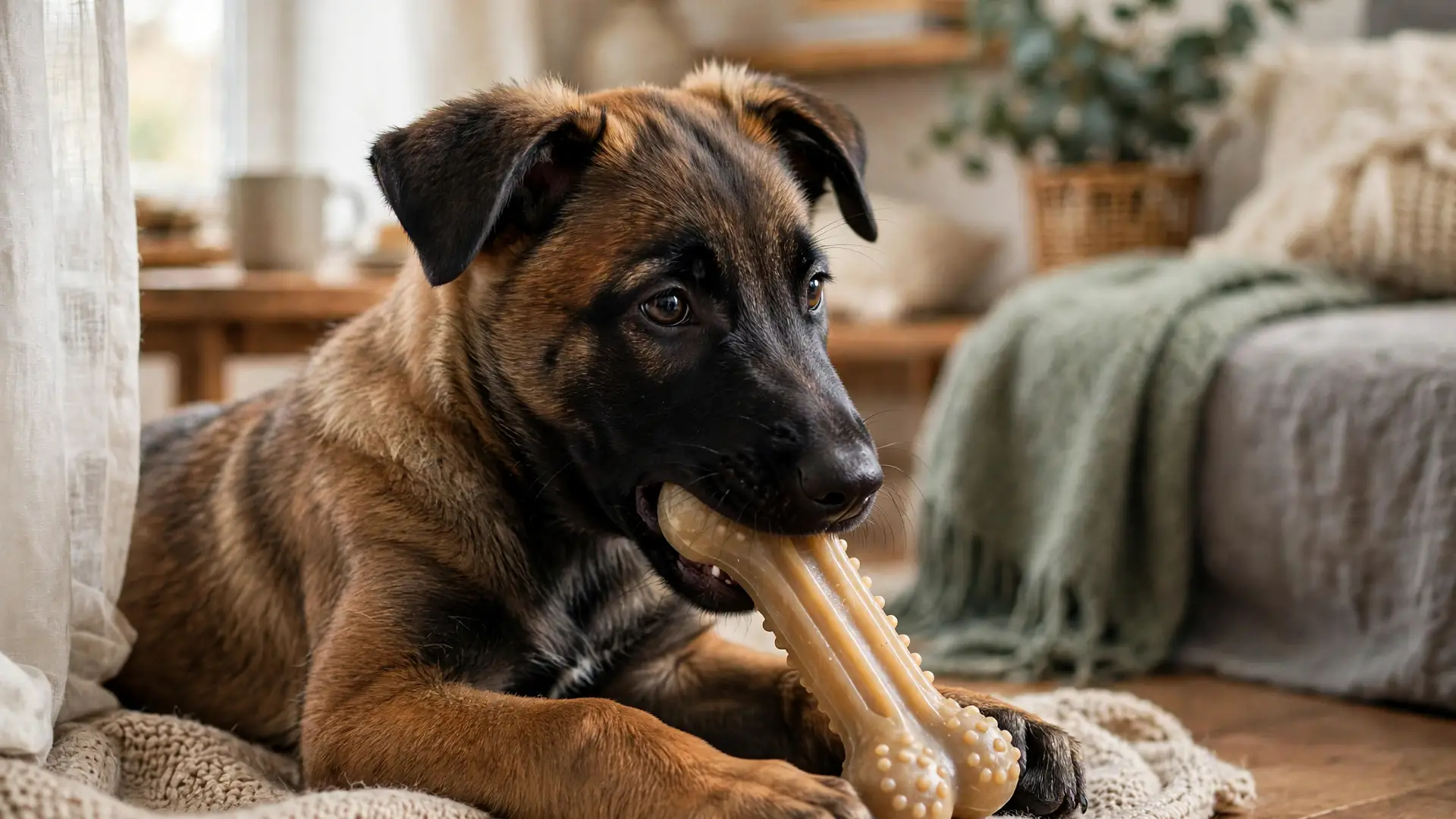
The kindest thing you can do for a teething puppy is to offer plenty of safe things to chew. Rubber chew toys designed for teething, rope toys soaked in water and frozen, and chilled carrots all soothe sore gums beautifully. Rotate the options every few days to keep them interesting, and always supervise chewing sessions, removing any toy that starts to break apart. Chewing is not misbehavior during teething: it is your puppy’s natural way of easing discomfort, so channel it rather than fighting it.
What to avoid
Not everything chewable is safe. Avoid cooked bones, which can splinter, and very hard nylon bones or antlers that can crack teeth. Skip toys with squeakers your puppy can tear out and swallow, and keep an eye on soft plush toys once the seams start to give. Ice cubes can be fun but may be too hard for some puppies, so offer crushed ice instead. When in doubt about any chew, check with your veterinarian or your puppy’s trainer before handing it over.
Protecting your home
While your puppy’s gums are in charge, your home needs a management plan. Move shoes, remote controls, and charging cables out of reach, and use baby gates or a playpen to limit access to rooms full of tempting table legs. If you catch your puppy chewing something forbidden, trade them for a tasty treat and redirect them to an approved chew. Never punish chewing: your puppy is not being naughty, they are simply following powerful instincts while their mouth hurts.
Vet disclaimer
This guide offers general information only and is not veterinary advice. If your puppy’s gums bleed heavily, they refuse food for more than a day, you notice broken teeth, or chewing seems driven by pain rather than teething, please contact your veterinarian promptly. Most teething troubles pass with time, patience, and plenty of safe chews.