Welcome to the senior years
One of the quiet joys of dog life is watching a puppy grow into a wise old friend. Senior dogs, roughly from seven or eight years depending on size and breed, slow down and their needs change. The goal shifts from adventure to comfort: softer beds, gentler exercise, and lots of unhurried togetherness. Small adjustments at home can add real quality to their golden years.
Comfortable resting
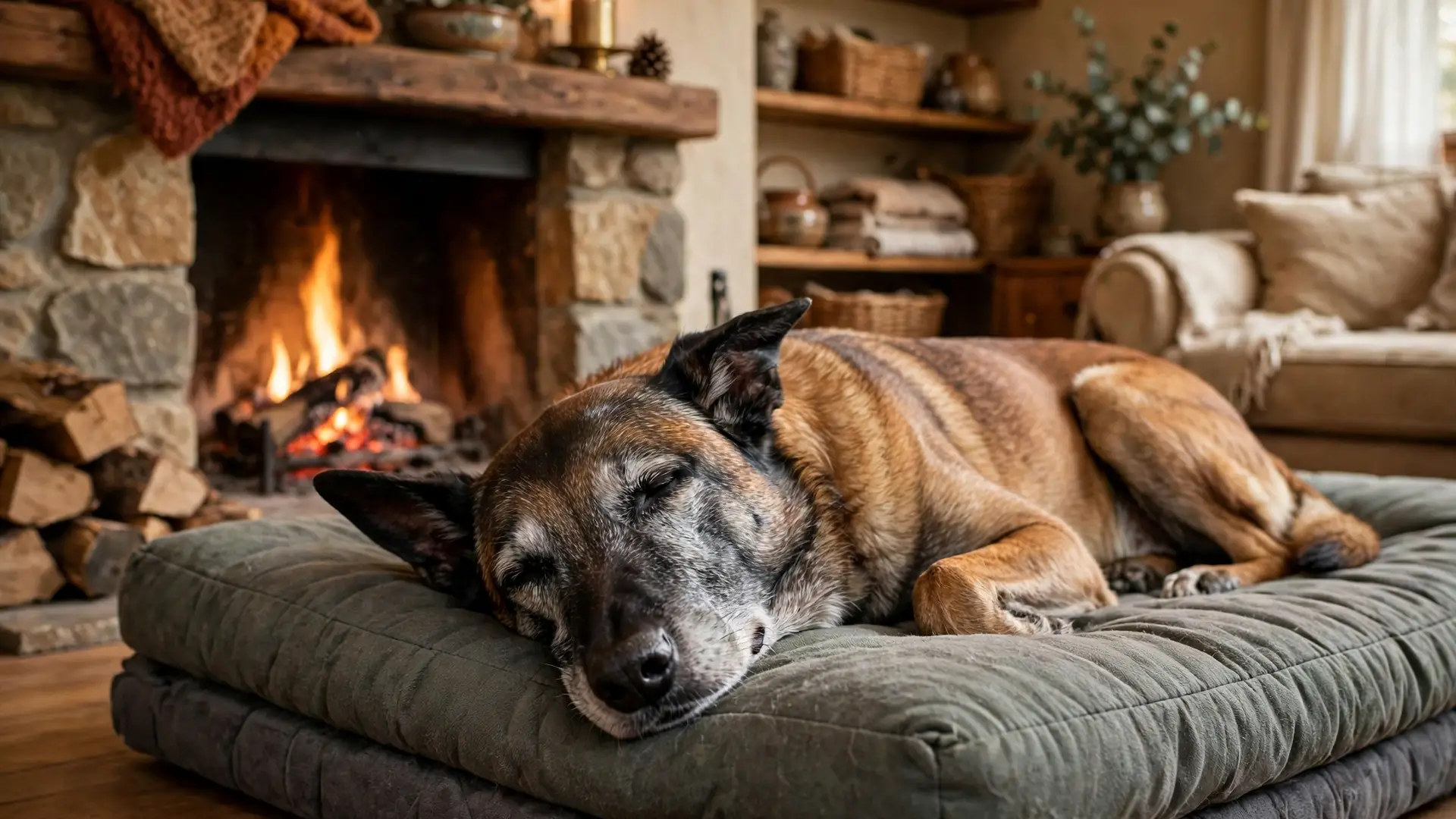
Provide a thick, supportive bed in a warm, draught-free spot, ideally where the family gathers so your old friend does not feel isolated. Orthopaedic or memory-foam beds ease stiff joints. Add ramps or steps to favourite sofas and cars so jumping is optional, and put non-slip rugs on slippery floors. Raised food and water bowls can make mealtimes more comfortable for stiff necks.
Gentle exercise
Keep moving, but adapt: several short, sniffy walks often suit an older dog better than one long march. Let them set the pace, and watch for stiffness after rest or reluctance on stairs, which can signal pain. Swimming or gentle hydrotherapy, where available, exercises joints without impact. Mental exercise counts too: nose games and simple puzzles keep an ageing mind bright.
Weight and diet
Keeping a senior dog lean is one of the kindest things you can do: extra weight punishes arthritic joints. Ask your vet whether a senior diet suits your dog, and measure meals rather than guessing. Older dogs may need more frequent, smaller meals, and dental problems can make hard kibble difficult, so watch how they eat and mention changes at check-ups.
Treasure the slow moments
Treasure the slow moments. An older dog may sleep more, hear less, and see less clearly, so approach gently and avoid startling them. Keep routines predictable, be patient with the odd accident, and celebrate what they can still do rather than mourning what has faded. Grey muzzles have earned their naps, their treats, and the very best spot by the fire.
Vet disclaimer
This guide shares general information only and is not veterinary advice. Dogs are considered senior at different ages, and health needs vary widely. Arrange check-ups at least twice a year for older dogs, and contact your veterinarian promptly about stiffness, behaviour changes, appetite loss, or any new lump, cough, or discomfort.