A polite first skill
Sit is one of the kindest first lessons you can teach a puppy. It gives them a polite way to ask for things, from greetings to mealtimes, and it builds the habit of offering calm behaviour. The good news is that most puppies learn it quickly, because sitting already feels natural to them. This guide uses lure-reward training: you guide the puppy into position with a treat, then reward, so learning feels like a game rather than a test.
What you need
Keep sessions short, about two to three minutes, and train when your puppy is calm but a little hungry, such as before a meal. Use tiny, soft treats that can be eaten in one second, because a long chew breaks concentration. Choose a quiet room with little going on. If your puppy is bouncing off the walls, take them for a toilet break and a gentle play first, then try again when they can think.
Step by step
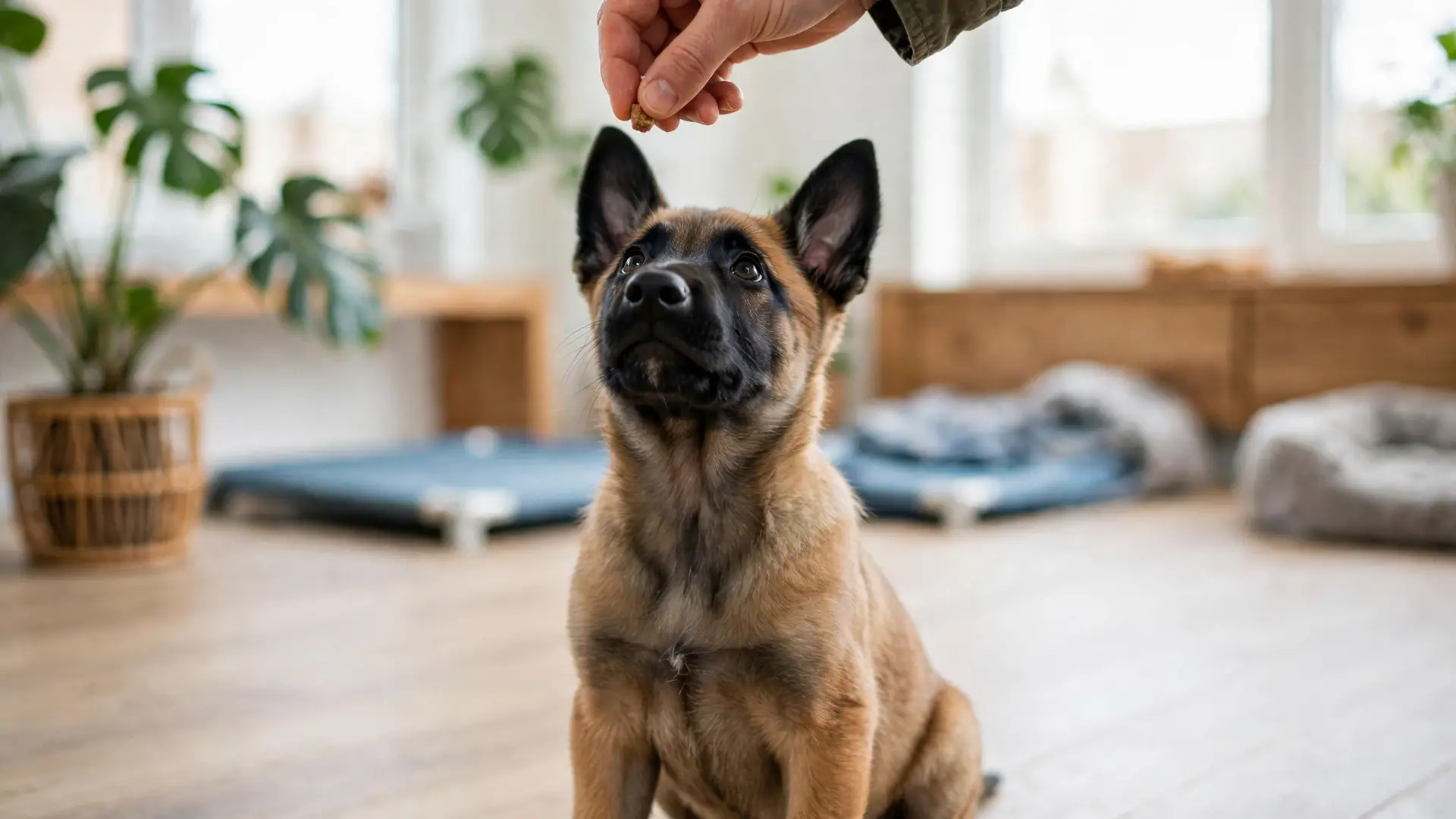
Hold a treat between your thumb and fingers, close to your puppy’s nose. Slowly move your hand up and back over their head, so their nose follows the treat and their bottom naturally drops toward the floor. The moment their bottom touches the ground, say “yes” in a bright voice and give the treat. Repeat a few times. When your puppy starts sitting as soon as they see your hand move, add the word “sit” just before you lure. Soon the word alone will do the job.
Troubleshooting jumping
If your puppy jumps for the treat instead of sitting, you are holding it too high or moving too fast. Slow down and keep your hand close to their nose. If they lose interest, end the session with something easy they already know, and try again later. Training should always end while your puppy still wants more, never when they are tired or frustrated. Two happy minutes beat ten grumpy ones.
Building reliability
Once your puppy sits on cue in the living room, practise in other rooms, then in the garden, then on walks, adding a little distraction at a time. Reward every sit generously at first, then gradually reward the best ones, the fastest or the calmest. Ask for a sit before meals, before clipping on the lead, and before greeting visitors, so the cue becomes part of everyday life rather than just a trick.
Vet disclaimer
This guide shares general training information only and is not veterinary or behavioural advice. If your puppy shows sudden changes in behaviour, pain, lameness, or fear that does not improve, contact your veterinarian promptly. For ongoing behaviour concerns, ask your vet to recommend a qualified, reward-based behaviour professional.