Why stay matters
A reliable stay is one of the most useful skills your puppy will ever learn. It keeps them safe at open doors, calm on the veterinarian’s table, and polite when guests arrive with shopping bags full of interesting smells. Unlike party tricks performed for applause, stay is a genuine life skill, and it is worth teaching with care and patience. The good news is that puppies pick it up naturally in small steps. Keep your sessions short, your mood cheerful, and your treats generous, and most puppies will offer you longer and longer moments of beautiful stillness within a single week.
What you need
You need very little equipment to teach stay: a pocketful of small, tasty treats, a quiet room with minimal distractions, and a puppy who is rested but a little bit hungry. Many trainers find that morning sessions work best, before breakfast, when motivation is at its peak. Keep your own energy calm and settled, because your puppy will mirror whatever you do. If you bounce and wave your arms, they will bounce too. Stand quietly, breathe slowly, and let your puppy discover that stillness is the behavior that earns all the wonderful things.
Step one: reward stillness
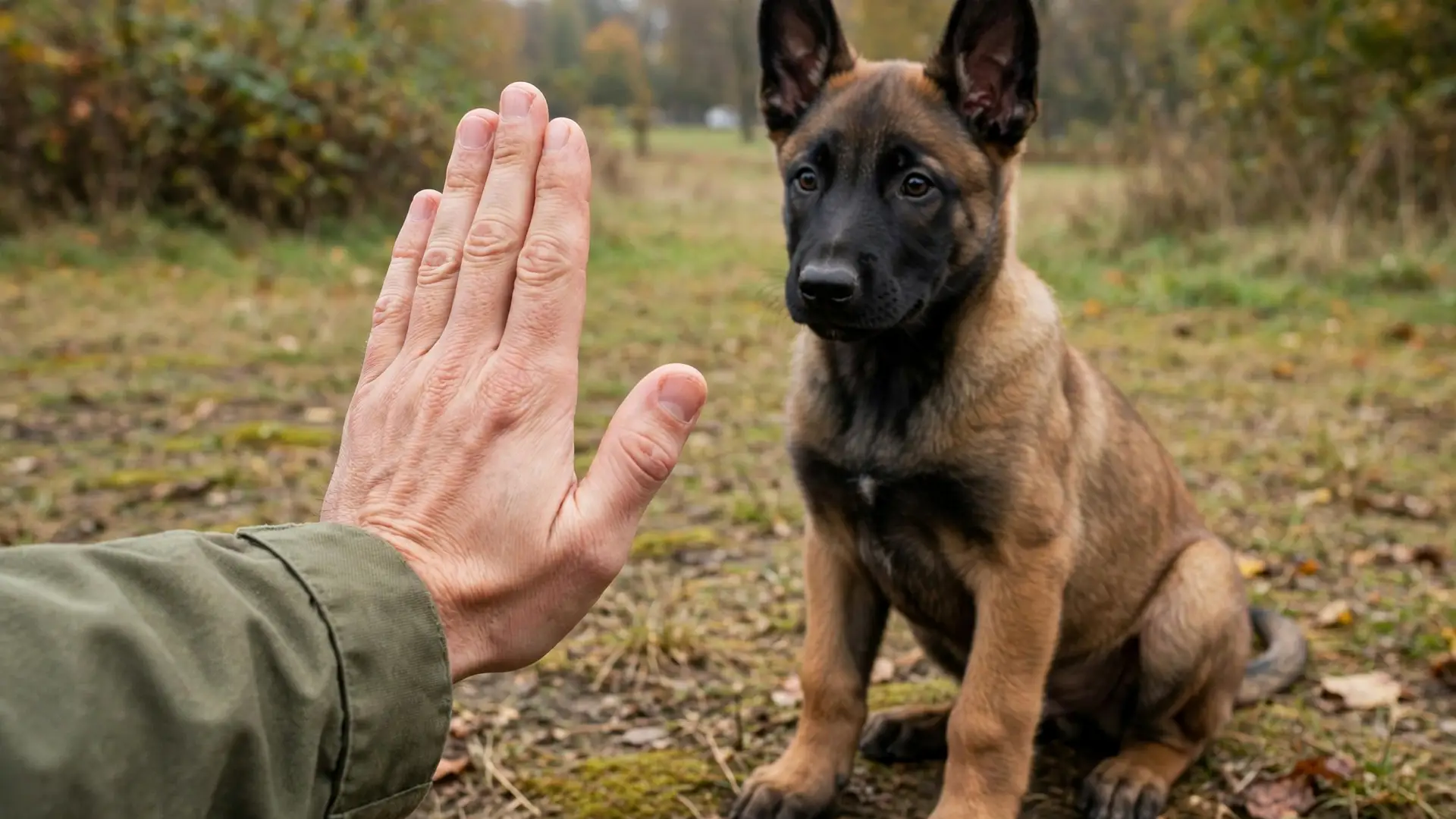
Ask your puppy to sit, then simply wait. The moment they are still, even for one single second, mark it with a bright, cheerful word such as yes and deliver a treat between their paws. Repeat this many times, gradually asking for longer moments of stillness: two seconds, then three, then five, then ten. If your puppy pops up, do not scold them. Simply reset them with a smile and try again at an easier level. You are building a powerful idea in your puppy’s mind: staying put is the most profitable choice they can possibly make.
Adding distance
Once your puppy can hold a stay for ten seconds with you standing right beside them, begin adding tiny amounts of distance. Take half a step back, pause, then return and reward. Then try a full step, then two steps, always coming back to your puppy to deliver the treat. Returning to reward matters: it teaches your puppy that holding position is what earns the treat, not breaking the stay to run after you. If your puppy keeps getting up, you have increased the distance too quickly. Shorten it again, rebuild their confidence, and progress more slowly.
Adding distractions
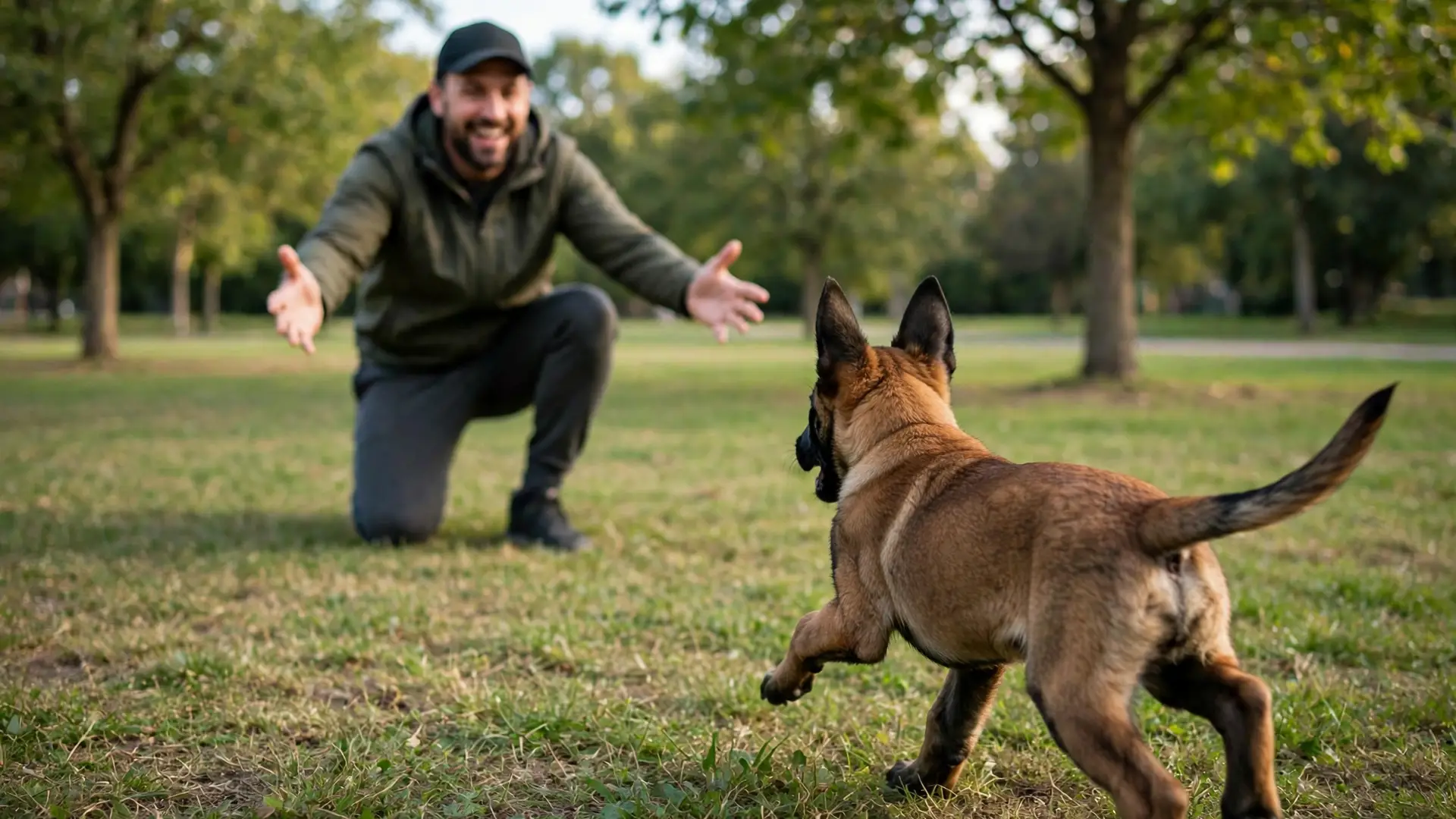
Real life is gloriously full of distractions, so your training should prepare for them. Introduce challenges gradually, one at a time. Start small: take a sideways step, clap softly, or toss a treat on the floor a few feet away and reward your puppy for ignoring it. When those are easy, raise the difficulty: bounce a tennis ball, open and close a door, or ask a family member to walk past. Keep a single consistent release word, something cheerful like okay, so your puppy always knows the exact moment the stay is finished and freedom begins.
Vet disclaimer
This guide offers general information only and is not veterinary or behavioral advice. If your puppy struggles with training, shows signs of fear or anxiety, or you are concerned about their behavior in any way, please speak to your veterinarian or a qualified positive-reinforcement trainer. Every puppy learns at their own pace, and patience is always the fastest route to success.